
-1-1.png?width=50&name=Higher_Elevation_Software_copy-removebg-preview(1)-1-1.png)
.png?height=200&name=The%20Best%20EHS%20Software%20in%202026%20(1).png)

Environmental, health, and safety (EHS) software helps organizations collect, manage, analyze, and...
Exposure Assessments 101: A Complete Life Sciences EHS Guide
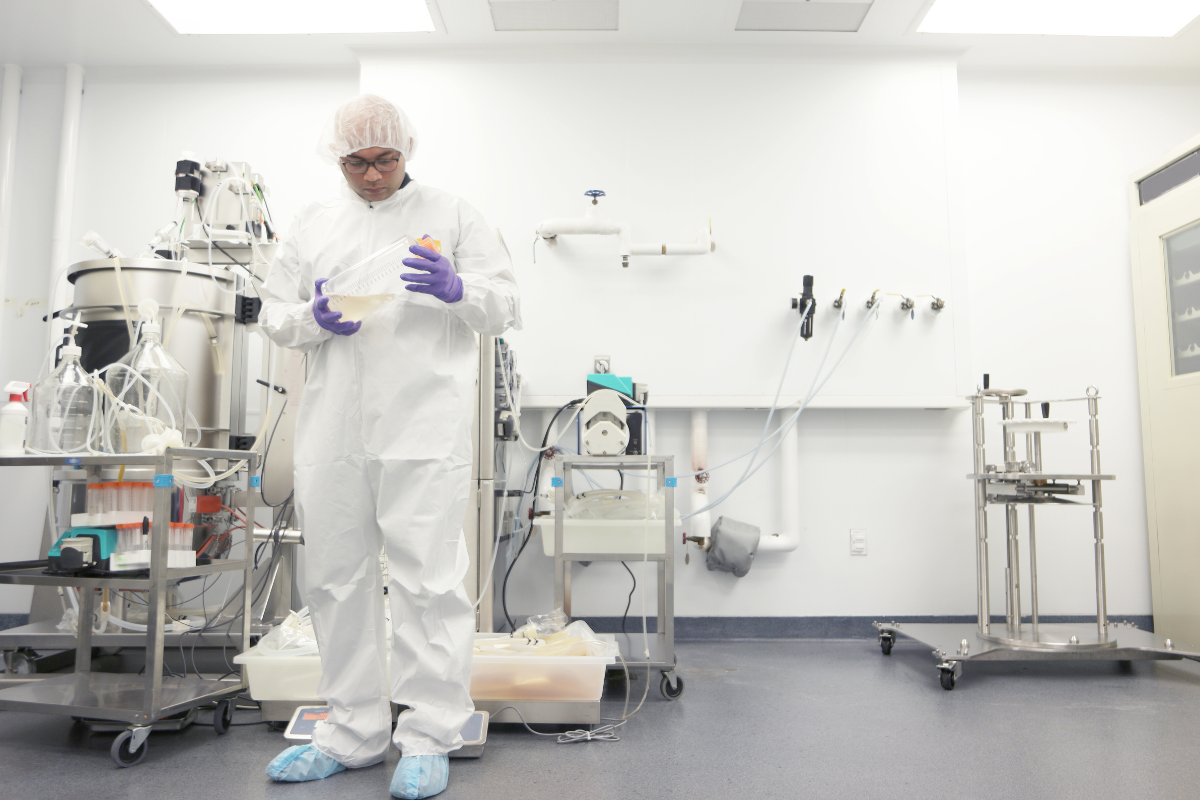
EHS managers at pharma, biotech, or medical device companies know that the words “exposure assessments” can have different meanings to different professionals. An industrial hygienist hears one thing. A toxicologist filing a chemical registration dossier hears another. An EPA risk assessor hears something else.
For most life sciences EHS managers, the version that matters most is the occupational one that describes and measures what your people are exposed to at the bench, on the production floor, and in the cleanroom.
This guide walks through why exposure assessments deserve your attention, what a defensible assessment includes, how to design a program that your team can implement without friction, how to measure whether it’s working, and how to scale your program with modern EHS software.
Table Of Contents
- Exposure Assessments are Integral to Effective Life Sciences EHS
- What Life Sciences Exposure Assessments Should Include
- Design Life Sciences Exposure Assessments that Hold Up
- How to Implement Assessments without Burning Out an EHS Team
- Measure the Effectiveness of Your Efforts
- Improve Exposure Assessments with Modern EHS Software
- FAQs
Exposure Assessments are Integral to Effective Life Sciences EHS
Many industries can argue that their materials aren’t biologically relevant. Life Sciences managers don’t have that luxury. The molecules, cells, vectors, and active pharmaceutical ingredients your team handles are purposefully designed to have an impact on the human body. That changes the math on every exposure scenario you assess.
It also changes financial stakes. McKinsey benchmarks have found that 25 to 30 percent of pharma conversion costs are quality-related, driven in part by rework, deviations, and the cascade of issues that follow when controls fail. Exposure incidents sit squarely inside that category. A single missed control on a high-potency API or a poorly characterized vector handling step can trigger investigations, halt production, and weaken your audit posture.
Regulatory drift compounds the issue. FDA scrutiny of EHS practices in clinical and commercial manufacturing has tightened in recent years. EPA is paying closer attention to biotech emissions and biohazardous waste. OSHA inspections continue to focus on hazard communication and laboratory standards. Every state and municipality you operate in adds its own layer of permitting and reporting.
Strong programs help EHS teams stop reacting to all of this and start proactively anticipating and preventing situations instead.
What Life Sciences Exposure Assessments Should Include
A defensible exposure assessment in a life sciences setting needs to cover more ground than the chemical-only checklist many teams default to. At a minimum, build yours around these six elements:
- Hazard Identification Across Four Classes: Identify potential hazards in chemical (solvents, APIs, cleaning agents, sensitizers), biological (cell lines, vectors, recombinant materials, infectious agents), physical (heat, pressure, noise, ergonomic load), and radiological areas. Note that the disinfectants and sporicides used to control biocontamination are themselves a major exposure source, so don’t let cleaning chemicals slip past you.
- Pathways and Routes: Document how exposure can occur (inhalation, dermal, ingestion, parenteral via sharps, mucous membrane) and the realistic scenarios in which each becomes likely.
- Quantification Against Established Limits: Look at OELs, PELs, TLVs, ADEs and PDEs for chemicals; OEB banding for potent compounds; risk group classification and biosafety level designation for biological agents. For novel modalities like cell and gene therapies, you’ll often work without a published limit and need to document professional judgment using pathogen safety data sheets and similar references.
- Similar Exposure Groups (SEGs): Make exposure assessments scalable by grouping workers according to job tasks and exposure profiles. Assess the groups, rather than each individual.
- Controls and Residual Risk: Understand what’s currently in place across the hierarchy of controls and how much exposure is left after those controls are applied.
- Documentation and Reassessment Triggers: Determine when the assessment gets revisited. Plan for process change, equipment changes, incidents, new material introduction, and regulatory updates.
Design Life Sciences Exposure Assessments that Hold Up
Good design starts with mapping your operations honestly. Gain insights by walking every area, not just the ones where you already perceive obvious hazards. Ownership of EHS gets murky, and exposures slip through in places like shared lab spaces, incubator suites, and contract development sites. Confirm in writing who’s responsible for which controls, permits, and emergency equipment.
From there, work through these steps:
- Build similar exposure groups based on actual task and material data, not org charts.
- For each SEG, identify both worst-case and routine-case scenarios. Both matter for your control strategy.
- Anchor every chemical to its current OEL or PEL, and every biological agent to its risk group classification. For potent compounds, assign an OEB.
- Use Heinrich’s Pyramid of Safety to understand the risks and apply the hierarchy of controls (elimination, substitution, engineering, administrative, PPE) in order. If you stop, document where you did so any why.
- Identify the data you’ll need to defend the assessment, including air sampling, biomonitoring, surface wipe data, ventilation verification, and biosafety cabinet certification records.
Plan reassessment cadence up front. Anything involving novel biologics, cell and gene therapy, or new manufacturing processes deserves a tighter loop, as these are areas where the underlying science and regulatory expectations are still evolving.
How to Implement Assessments without Burning Out an EHS Team
Like in many sectors, when Life Sciences assessment programs fail, it’s usually at implementation, not design. The framework looks great on paper and then dies because nobody maintains it. A few practical moves help.
Don’t try to launch everything at once. Start with the highest-risk similar exposure groups and work down your list. Pair every assessment with a clear list of the data inputs required and the responsible owners. Build training that’s specific to the SEG, not a generic annual hazcom slide deck.
Determine which sampling and monitoring efforts are repeatable, and which are one-time initiatives. Ventilation verification, BSC certification, and respirator fit testing must recur on a defined schedule. Initial baseline sampling for a new process is typically one-time, with follow-up triggered by change. Document the cadence so the program runs whether or not you’re personally spearheading it on any given week.
Explicitly tie exposure assessments to your EHS CAPA management system. When sampling shows a control gap, that’s a CAPA. When an SDS update changes a chemical’s hazard classification, that’s a reassessment trigger. When a near-miss surfaces a control weakness, that’s both. The link between assessment, finding, and corrective action should be traceable in one place, not scattered across email threads, shared drives, and someone’s local spreadsheet that nobody else can find.
Measure the Effectiveness of Your Efforts
You can’t manage what you don’t track. Many EHS teams over-rely on lagging indicators such as recordable injuries, and OSHA rates and insufficiently prioritize the leading indicators that tell you the program is functioning.
A useful scorecard for a life sciences EHS team should include:
- Percent of SEGs with current, documented exposure assessments
- Percent of monitoring results within the OEL or below the action level
- Time from process change to reassessment completion
- Closure rate and average age of exposure-related CAPAs
- Training completion rate by SEG
- Near-miss reporting rate
- Internal and regulatory audit findings related to exposure controls
Review these on a regular cadence with your operational leadership, not just at year-end. If your fume hood verifications, BSC certifications, or generator run-time checks are slipping, those are early warnings worth catching before an inspector does.
Improve Exposure Assessments with Modern EHS Software
The teams that run mature Life Sciences assessment programs without burning out have one thing in common: they’ve stopped trying to manage them in spreadsheets and disconnected files. Here’s how a purpose-built platform like the EHS-Dashboard™ from Higher Elevation Software pulls the moving pieces into one centralized, customizable system:
- Real-time visibility into exposure data: Sampling results, monitoring records, and SDS data live in one place, with visual dashboards that surface what’s drifting before it becomes a finding.
- Automated reassessment triggers: When a process changes, an SDS updates, or a new material is introduced, the system flags the affected exposure assessments and the SEGs they cover.
- CAPA and audit linkage: Exposure findings tie directly to corrective actions, with full audit trails ready for OSHA, FDA, or EPA inspection.
- Customizable workflows for your operations: Whether you’re running a single biotech lab or coordinating across multiple sites, the platform adapts to your structure rather than forcing you into a fixed template.
- Mobile field inspections: Sampling, walkthroughs, and corrective actions get logged where the work happens, not three days later from memory.
Scalable pricing by site, not by user: You’re not penalized for adding the team members who actually need access to the data.
Take the Next Step
Exposure assessments are one of the highest-leverage tools in any EHS manager's kit. Supporting your assessment program with the EHS-Dashboard™ is the best way to protect your people, audit posture, and operating budget.
Built by EHS experts and software developers together, the EHS-Dashboard™ is designed for the small-to-medium teams that need enterprise-grade support without enterprise-grade overhead.
If you’re ready to see how the EHS-Dashboard™ can help you move beyond compliance and toward real protection, request a demo or a free trial today. We’ll show you exactly how it fits into your operations.
Frequently Asked Questions
What should a defensible exposure assessment include in a life sciences setting?
A strong assessment covers hazard identification across chemical, biological, physical, and radiological classes, along with the pathways and routes of exposure. It also quantifies exposure against established limits, uses Similar Exposure Groups to stay scalable, documents existing controls and residual risk, and defines clear triggers for reassessment.
Why do pharma and biotech companies face higher stakes around worker exposure than other industries?
The materials handled in life sciences, such as APIs, cell lines, and vectors, are specifically designed to affect the human body, which raises the stakes of every potential exposure scenario. Beyond worker safety, a missed control can trigger investigations, halt production, and weaken audit posture with regulators like the FDA, EPA, and OSHA.
What are Similar Exposure Groups (SEGs) and why do they matter?
SEGs are groupings of workers who share similar job tasks and exposure profiles, which makes exposure assessments scalable across an organization. EHS teams can assess the group as a whole, making it far easier to manage data, build targeted training, and prioritize the highest-risk populations first.
How often should exposure assessments be revisited?
Reassessment cadence should be defined up front and tied to specific triggers like process changes, equipment modifications, new material introductions, incidents, or regulatory updates. Programs involving novel biologics, cell and gene therapy, or new manufacturing processes generally warrant a tighter reassessment loop because the underlying science and regulatory expectations are still evolving.
What metrics indicate that a life sciences EHS program is succeeding?
Leading indicators matter more than recordable injury rates alone. Useful measures include the percent of SEGs with current documentation, the percent of monitoring results below action levels, time from process change to reassessment completion, CAPA closure rates, training completion by SEG, near-miss reporting rates, and audit findings tied to exposure controls.

.png?height=200&name=non-compliance-blog_image%20(1).png)